Ilze Pretorius - Atmospheric Scientist
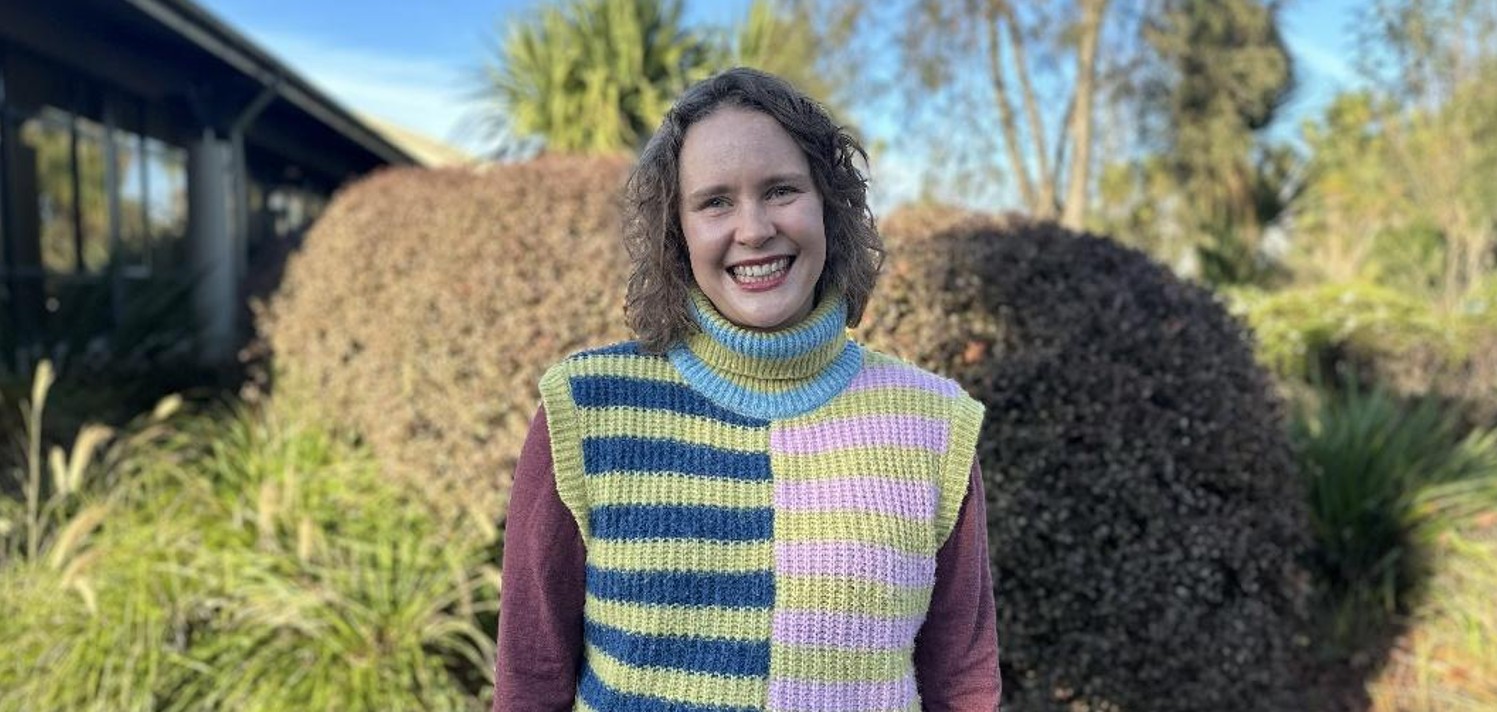
Atmospheric scientist Ilze Pretorius doesn’t like routine. That’s why her role suits her perfectly.
“No two days – or any two projects - are the same,” she says. “I can discover new things every day, which is humbling. You never feel like you’re an expert. There’s so much in our beautiful world to learn.”
Ilze, an early career researcher with the Bioeconomy Science Institute’s Scion group, focuses on atmospheric transport for biosecurity applications. The South African is the science lead of a five-year research programme supported by the Ministry of Business, Innovation and Employment’s Endeavour fund. It is, Ilze says, quite big. “There’s a lot to look after. There are lots of scientists working in this space and lots of collaborations, so an average day is mostly spent catching up with research area leads.
The Protecting Aotearoa from wind-dispersed pests programme aims to predict when and where pests might arrive, using an early-warning system (aerobiological surveillance and prediction – ASaP), which Ilze’s team is developing. It will fill knowledge gaps on aerial invader/pest arrival and survival in extreme atmospheric conditions, giving New Zealand the chance to act before pests take hold to protect the land from unwelcome organisms.
“My responsibility is to make sure all those research areas fit together,” Ilze says. “Every day I've got another focus area where the team and I need to brainstorm solutions.”
She also supports the team in experimental design thinking, does a lot of reporting across the different research areas and is responsible for planning to keep things on track. It’s a busy role. “I also spend a lot of time on planning events and workshops and presenting at conferences.”
Ilze was a finalist in the 2026 Early Career Researcher category of the ScienceNZ awards, in recognition of her hard work and contributions to forest biosecurity science.
Work and play
Ilze grew up in Johannesburg. She completed an undergraduate degree in geophysics, an honours degree in geophysics and a master’s in meteorology at the University of Pretoria, followed by a PhD in atmospheric sciences at South Africa’s Northwest University.
She came to New Zealand at the end of 2015, largely for – like a lot of South Africans – safety reasons. “In South Africa, it's not that safe to spend a lot of time outdoors,” she says. “To have the freedom made New Zealand an attractive option.
“Just the fact you can as a woman alone go for a run in the forest or on a tramp and not worry about personal safety, and there are such vast areas to explore in the national parks. New Zealand's beautiful – it’s such an amazing place to live.”
As well as tramping in her free time, Ilze enjoys drawing and painting. One of her artworks hangs in Scion’s Rotorua building. She also used to rock climb. She and husband Johan – also South African – met at the climbing wall at the University of Pretoria and have a son, Jansen, who’s just turned two and keeps his parents on their toes.
Ilze’s interest in science started in primary school. “There was a drought in the Gauteng area, and there were strict water restrictions,” she says. “That was when I started thinking about the environment and the fact we are so vulnerable, and I remember forcing my whole family to bath in the same bath water and then watering the plants afterwards with that.
“I think I annoyed my parents a lot now, thinking back,” she laughs. “But I really took it seriously.”
In high school, Ilze read a book called Ishmael by Daniel Quinn, where the main character is a gorilla. That left a lasting impression too. “He talks to this man about how we ended up in this environmental situation, from the perspective of a gorilla. That put things in perspective for me: how detached from what’s important in the world and how we’ve basically messed up, and that solidified my desire to do something in environmental sciences.
Scion work
Getting the Endeavour funding for the Protecting Aotearoa from wind-dispersed pests programme has been a career highlight for Ilze so far. “Scientists don’t often get the privilege of working on a programme for so long,” she says. “This is an amazing opportunity to build a deep understanding of the work.”
The programme is ramping up this year – it runs until 2028 – and the focus is on getting the ASaP system completed so the New Zealand primary industry can use it. “I think that's one of the biggest challenges in science today: scientists are so sometimes quite isolated and the work isn’t being used out there where it can make a difference,” Ilze says. “There are always going to be challenges.
“Of all the people that study science, only a very small percentage of people end up doing active research because there's such limited funding. It's important for people to realise that if they’re planning to study science.
“But the benefits are massive. The work is humbling, challenging and fun all at the same time, and it’s an incredibly fulfilling career. I'm very happy with the career choice I made.”
Rosie Sargent - Senior Technologist
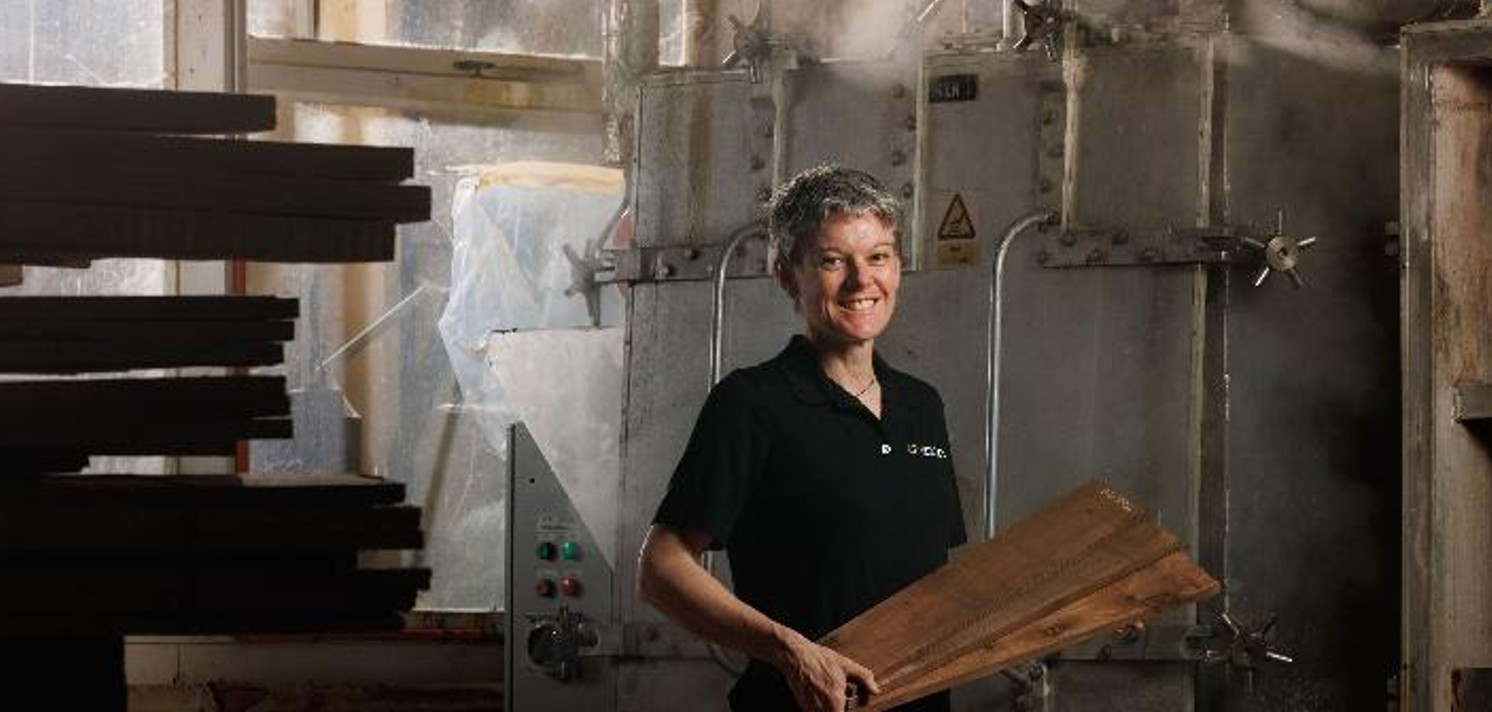
Rosie Sargent loves wood. It’s an incredible complex material, she says, that performs well and shouldn’t be underestimated.
It’s that love that gets the Bioeconomy Science Institute senior technologist up in the mornings. Rosie’s work centres around processing wood, mainly around wood drying and modification. “My work is really varied,” she says. “On any given day I could be reading literature and figuring out logistics for a processing trial, analysing data, or driving the forklift and stacking timber.”
Currently she’s helping some commercial clients scale-up a new process from the lab scale to the sawmill. “It’s exciting. We’ve been helping them find the best processing conditions and monitor the process to make sure it’s working the way they want.
Rosie and her team are also commissioning a new control system for kilns in the timber drying lab. “This will give us a bit more functionality and bring us up to date with the control system used in most New Zealand and Australian sawmills. Part of my job is to help sawmills better manage their drying processes, so being familiar with the latest control software is an important part of that.”
Background
She has an engineering degree (chemical and process engineering) from Canterbury University. This field, she says, was a natural fit for her. “I was always really interested in science, but also very practical. My current role has a really good mix of the curiosity and discovery of science, plus the practical side working with equipment and machinery.”
Rosie started as a scientist with Scion (now part of the Bioeconomy Science Institute) 25 years ago, when it was the Forestry Research Institute. Her work, she says, has always been ‘a bit fluid’, spread across a range of projects and areas. She’s led various projects for nine years and became a senior technologist in 2020.
She also worked over the 2020/21 summer at Carter Holt Harvey Tissue (now Essity) in Kawerau, helping improve the operation of the pulp mill. “I really like working with equipment, especially at pilot- and industrial-scale,” she says.
Working with mills has provided some memorable career moments for Rosie. “Setting up and running a mill trial is a real achievement,” she says. “You have a process that works on a smaller scale, then you are asking a whole mill full of people to stop what they’re doing and try your new process. It takes a huge amount of planning, but seeing something new working on an industrial scale is really exciting.”
Outside the lab
Rosie grew up in Nelson. She moved to Canterbury for university before coming to the Bay of Plenty. The best thing about Rotorua, she says, is its location. “It’s central to a lot of outdoor activities and there’s so much to do close to town – lakes, bushwalking and mountain biking.”
“I really enjoy being active in the outdoors – mountain biking, tramping – the top of the South Island and Mt Taranaki are favourite spots, though I don’t get there as often as I’d like – and a bit of trail running, largely on the trails around Lake Okataina.
She also enjoys making things. “I have three sewing machines, plus a workshop with metalworking and basic woodworking tools. I do enjoy gardening, but it gets neglected at the bottom of the list of hobbies. Mostly I grow hops, which I brew into one or two batches of IPA each year to enjoy with friends.”
Rosie and her partner Bruce also love going off on adventures. “We’ve got no kids, pets or houseplants,” she jokes. They’ve done some climbing on Ruapehu and Tongariro this past winter, and Rosie walked the Larapinta trail in the Northern Territory with a friend in July. “Finding time for all my hobbies is an ongoing challenge,” she laughs.
The future
Back on the work front, the year ahead will bring plenty of challenges for Rosie and her team, too. “We’re really keen to start a project processing redwood timber,” she says. “More and more redwood is being grown in New Zealand, and in 15-20 years there’ll be enough being harvested to justify a purpose-built redwood sawmill.
“For this to happen, we need to start learning more about what products we can make from different parts of the redwood tree, and to understand how best to process them.”
Rosie recently ran a two-day course on timber drying, for staff from Windsor Engineering and Automation & Electronics (A&E). The feedback was excellent, and she hopes to run further courses. She enjoys sharing her knowledge and passion for wood and says there’s always lots of interest in her work.
“People love the look and feel of wood. I sometimes have people wanting to look at or touch my research samples. I’m not sure that would happen if I was working with concrete or steel.”