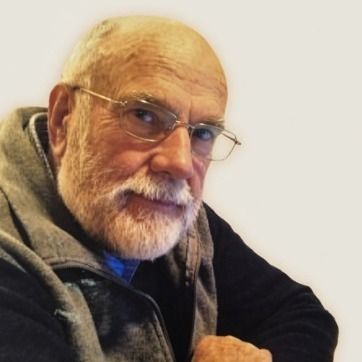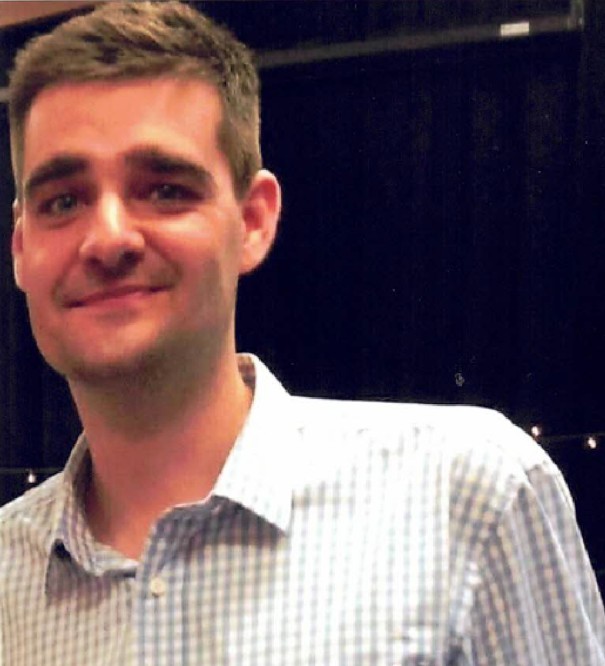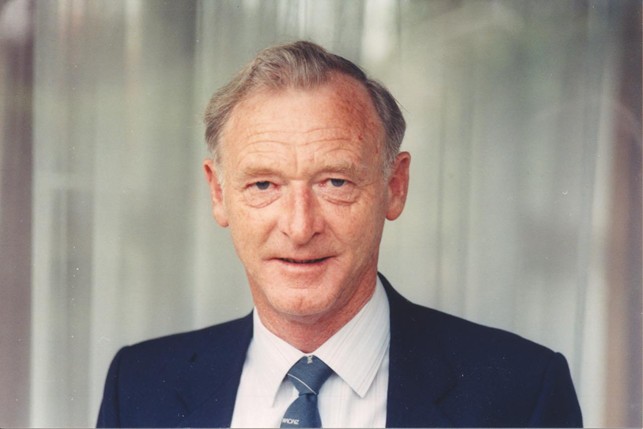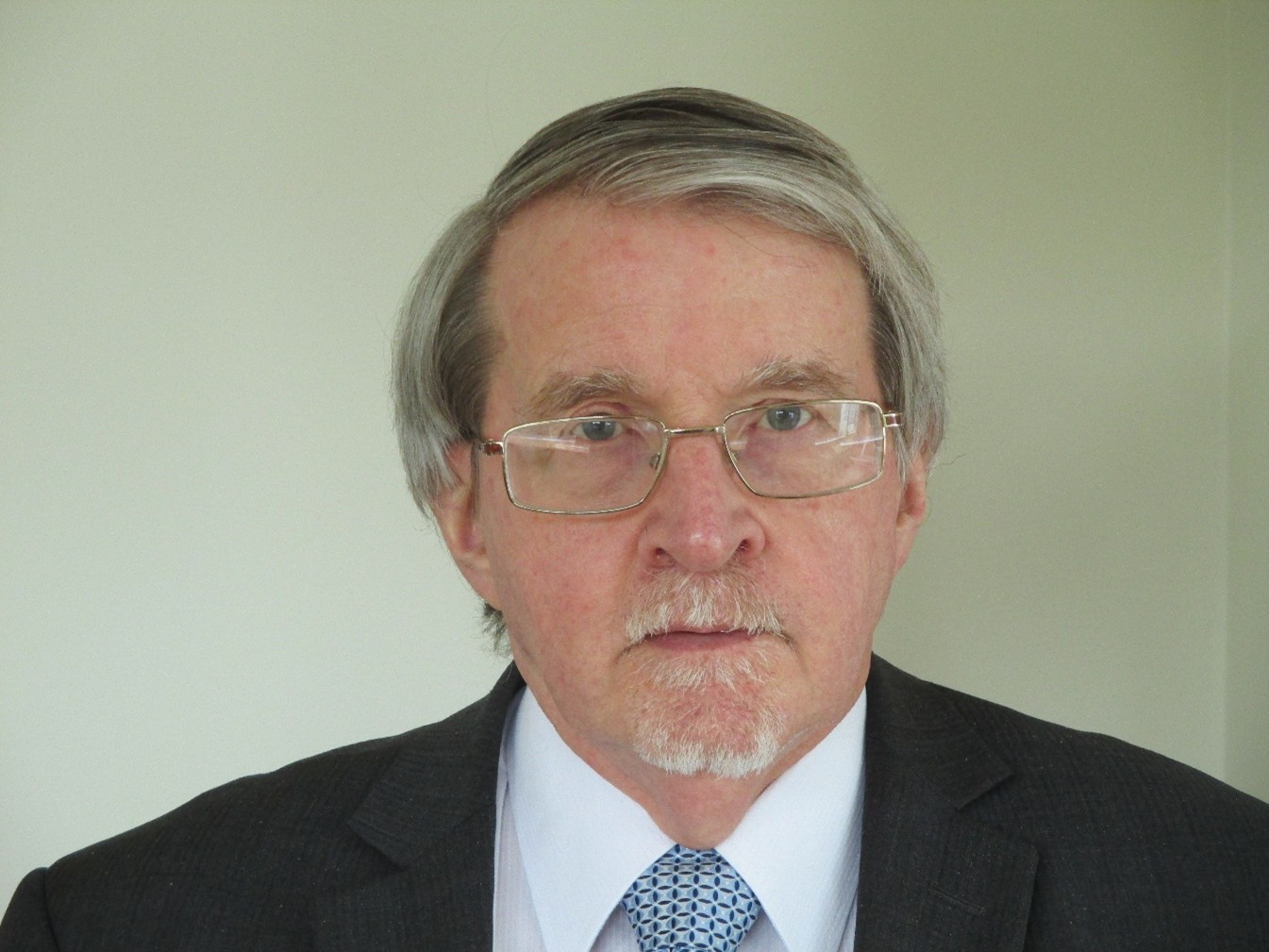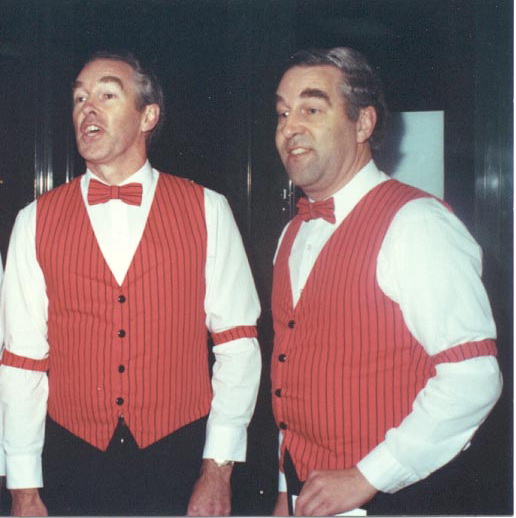
Graeme (left) and Ross (right) in 1988, one half of “The Coordinated Chemists” barbershop quartet. Image supplied courtesy of the Harbour Capital Chorus.
Obituary
Earlier this year we lost two brothers who made important contributions to New Zealand’s chemistry scene. Graeme Gainsford and his younger brother, Ross, both passed away following illnesses. The two brothers both attended Christchurch Boys High School and Ross followed Graeme in graduating with a doctorate from Canterbury University before they both found their way to the Chemistry Division of DSIR.
Graeme initially joined the Physical Chemistry Section, working under Peter Williams in X-ray crystallography. In those days, defining the structure of materials was usually carried out by X-ray powder diffraction. Graeme pioneered single crystal X-ray work there and became a master at choosing and manipulating the tiny crystals needed to determine structures. As computers became available, Graeme developed familiarity with paper tape and punched card input for the big mainframe computers, one of the few workers within Chemistry Division using computers to undertake the tedious calculations needed to convert X-ray spots into atom positions within a crystal. His ability in being able to read and analyse the faint patterns of organic molecules helped the Carbohydrate group under Richard Furneaux and Peter Tyler become world leaders in drug precursor synthesis. After the disaster with thalidomide, it was essential that the exact stereo orientation of any potential drug compound be known and Graeme’s work helped establish and identify the active enantiomers in the new field of drug synthesis. In this field, he was coauthor on over 300 published papers.
With the formation of Industrial Research Limited (IRL) in 1992 and the subsequent reshuffle of scientists, Graeme became part of the Inorganic Materials team under Neil Milestone. While he continued his association with Richard Furneaux’s Carbohydrate group, he played an important role in understanding metal substitution and structure in the new porous aluminophosphate materials and showed that stereoisomers could also exist in framework inorganic materials. Graeme was part of the team investigating the catalytic activities of the new zeolites being used for the synthetic gasoline project in the late 1980s and early 1990s. But his real love was understanding crystal structures, and with a reshuffle within IRL in the early 2000s, he formally moved into the Carbohydrate team as they rapidly expanded with international collaboration, from where he retired. For his work in crystallography, he was awarded the Shorland Medal in 2008.
Ross pursued a different line, taking on rapid chemical analysis using spark source spectra and instrumental analysis to determine chemical composition, rather than following the tedious requirements and procedures needed for wet chemical analysis. When rapid X-ray fluorescence analysis became available outside DSIR Chemistry, Ross joined the Inorganic Materials team as zeolites were being investigated for gasoline production in New Zealand.
Following the science restructuring in 1992, Ross moved to the newly formed Institute of Environmental Science and Research (ESR) to lead the new instrumental analysis team set up for evidential blood alcohol testing. Here he became the main consultant for the police in breath analysers, calibrating and maintaining the handheld breathalysers. It was this position he retired from, although he was continually called back if there was a dispute over their workings.
Graeme and Ross formed half of The Coordinated Chemists, a barbershop quartet, who performed at many chemistry related functions. The other two were Don Rogers and Ross Fletcher. Graeme formed the Harbour Capital Chorus and was its first musical director. The Chorus is still singing today.
Contributed by Neil Milestone
Remembering Graeme Gainsford
Very shortly after the first Bruker diffractometer arrived in Canterbury, Ward [Robinson] went away for six months or a year. He left Peter Steel and me in charge of the shiny new machine and the NZ crystallography service. Peter and I were what Ward would have called "neophytes" - and that term would have been flattering us - but we got into it with a textbook (Stout & Jensen) in one hand and the SHELXTL manual in the other. We fell in a lot of "traps for young players" but, every couple of months Graeme Gainsford would bound in, in a burst of fresh air and enthusiasm to collect some data for himself. We (or possibly only me) ambushed him each time and he patiently guided us through the latest set of confusions - every time leaving us somewhat more competent than when he arrived. Of course, I met Graeme many times over subsequent years, but my first impression of infectious enthusiasm and helpfulness has stayed with me.