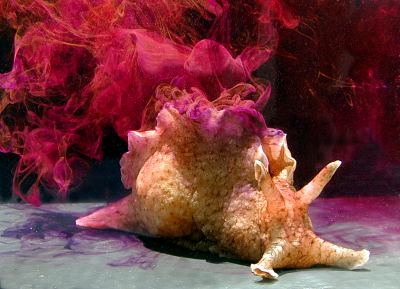

"The murex does the same; but the purple has that exquisite juice which is so greatly sought after for the purpose of dying cloth, situate in the middle of the throat. This secretion consists of a tiny drop contained in a white vein, from which the precious liquid used for dying is distilled, being of the tint of a rose somewhat inclining to black… It is for this colour that the fasces and the axes of Rome make way in the crowed; it is this that asserts the majesty of childhood; it is this that distinguishes the senator from the man of equestrian rank; by persons arrayed in this colour are prayers addressed to propitiate the gods."
- Pliny the Elder, Natural History IX.60
The chemistry of colour
We perceive a narrow band of the electromagnetic spectrum, between roughly 400 nm (violet) and 700 nm (red), as colour. From the beginning of human history colour has been connected to every aspect of human life and producing colours is one of the oldest applications of what we call chemistry.1
We don’t think much about colour nowadays. A casual browse of clothes shops or the internet reveals a literal rainbow of colour options with which we might garb or ink ourselves, decorate our environment without considering the inordinate cost of the dyes involved or whether we are transgressing some legal boundary by presuming to wear a vivid red or a proprietary shade of blue.
It was not always so.
Prior to William Henry Perkin’s success in synthesising “mauve” in 1856 (synthesised from aniline disulfate and potassium dichromate - one of the first synthetic dyestuffs), dyes were a big social and economic deal. Whole industries were developed around the production of the plant and insect derived dyes indigo and cochineal, both highly prized and expensive commodities. The problem with natural compounds as starting materials, however, is it is only a matter of time before demand outstrips supply.
Perkin was enrolled in the Royal College of Chemistry but abandoned his studies at the age of eighteen to go into business when he realised the value of his discovery. At that time there was no knowledge of structural formulas. Perkin was working in the dark but managed to develop a cheaper way of producing the basic raw material, aniline, and ways of making the new dyes adhere to cotton and silk. Perkin had four coal tar dyes on the market before 1860 (picric acid, mauve, magenta and rosolic acid). Initially called “Tyrian” purple or aniline purple, the name was changed to mauve a year into production. Other better colours were produced from all four compounds, and by the age of thirty-six, Perkin was a wealthy man.2
Body and face paints have been used for cosmetic, ceremonial, military and religious reasons from the earliest times. Pigments for cosmetic use were well developed over 5,000 years ago. In ancient Egypt, eyelids were painted with black (toxic) galena (PbS) and green malachite (basic CuCO3Cu(OH)2). Changing ideals of beauty through the ages saw other colours come into favour such as white lead (basic (Pb(CO3)2.Pb(OH)2)), a common cosmetic in ancient Rome conferring a drawn, pale appearance considered attractive by some. Its use reached an apogee between the 15th and 18th centuries CE.3 The ancient Britons used woad, which produces a blue dye (indigo), to paint themselves giving them a terrifying appearance in battle.4
These compounds employed for painting and bodily adornment were frequently pigments, colours in powdered form that are suspended in a medium in which they are insoluble. The first known pigments date from the Palaeolithic period (350,000 BCE) at which time earths were used to decorate the bodies of the living and the dead. These pigments include ochres (oxides of iron varying from light yellow to red), carbon black (soot) and manganese oxide (MnO2). A technique for heating yellow ochre to produce red ochre is known from approximately 40,000 BCE.5
Synthetic pigments followed, including the first - Egyptian blue (calcium copper silicate, CaCuSi4O10 appearing around the 3rd millennium BCE). This pigment filled a ‘gap’ in early colour palettes that lacked large quantities of natural blue minerals, and it was produced in large amounts for use in paints and inks. It was exported to Rome under the name Alexandrian blue.
Colourful compounds are of course not confined to the inorganic world. The colouring of fabrics especially almost universally employed organic dyes. Linen dyed red with the madder plant is known from Old Kingdom Egypt (c.2700-2200 BCE), and safflower, a source of red and pink colours, has been identified in Tutankhamun’s tomb. Egyptian dyers used indigo, kermes (from a scale insect that feeds on the sap of oaks, a source of natural crimson), various lichens, alkanet (whose root produces a red colour), saffron and other plant derived compounds. According to Pliny the Elder, it was the Egyptians who also invented mordanting, a treatment of fibres with chemicals that allowed the dye molecule to adhere better increasing colour fastness.6,7
Tyrian purple
Of all the dyes of antiquity, Tyrian purple was the most renowned, the most expensive and eventually, the most exclusive.
“Sea-purple” was extracted at great expense from the bodies of molluscs. Many factors influenced the final colour of the dye, including the type of mollusc used: murex trunculus, produced a bluish tint, while murex brandaris (most common), a more reddish one (other species used included Purpura lapillus and Helix ianthina). What was described as ‘purple’ in antiquity actually represented a wide range of hues with ancient purple possibly being more red than blue.8
Living in relatively deep water, these shellfish were caught in baited traps suspended from floats. The first historical mention of the dye is in texts from Ugarit and Hittite sources dating from the 14th century BCE in the eastern Mediterranean. In Phoenician mythology the discovery of this purple is credited to the pet dog of Tyros, mistress of Tyre’s patron god Melqart. After biting a washed-up mollusc, Tyros noted the dog’s mouth was stained purple. Tyros asked for a garment made of the same colour.9 The Chronicle of John Malalas (a Byzantine chronicler who wrote in the 6th century CE) gives a variation of the story:
"In the time of the reign of Phoenix there lived the philosopher Herakles, known as the Tyrian, who discovered the murex. While he was wandering along the seashore by the city of Tyre, he saw a shepherd’s dog eating what is known as a murex, which is a small kind of sea snail. He saw the shepherd, who thought the dog was bleeding, snatched up a tuft of wool from his flock, wiped off what was dribbling from the dog’s mouth, and so stained the wool. But Herakles noticing this was not blood but a dye of unusual quality, was amazed. Knowing the dye remained on the wool came form murex, he took the wool from the shepherd and brought it as a great gift to Phoenix the emperor of Tyre.
"Phoenix too was astonished by the sight of the wonderful colour of the dye and amazed at its discovery. He commanded that wool be dyed with the colour from the murex and that it be made into an imperial robe for himself.”10
Phoenix would go on to decree from that time forth no one from his empire would wear such glorious garments so that the emperor might be recognised by the army and all the people because of his amazing and unusual attire. These stories are almost certainly apocryphal, but this did not stop the Phoenicians turning cloth dyed with Tyrian purple into a hugely successful export, although they did not have a complete monopoly. Minoan Crete manufactured the dye on a smaller scale and there is evidence for its production dating back to the 18th century BCE in the region of Qatar where middens exclusively contain molluscs known to produce purple dye.11
Already, even if Malalas is projecting his own era’s considerations back in time, we see intimations of Tyrian purple becoming the exclusive province of the nobility with Phoenix’s declaration.
By 800-700 BCE, Tyrian purple’s esteem weeps from the Homeric epics, in the Iliad and Odyssey, since only persons of the highest status wore it. Agamemnon wears a purple cloak; Hector’s ashes lie in a gold urn swathed in purple garments. The Persian King Cyrus (c.600-530 BCE) claimed the white-striped, purple tunic of the royal regalia his exclusive royal symbol and from this time on until the end of antiquity the use of purple as royal insignia only grew and flourished.12
Colour and status
The matching of specific colours to hierarchy is by no means confined to the ancient Mediterranean, and indeed it appears to be a universal human trait. During the Chinese Tang dynasty (628-907 CE), the common people were forbidden to wear or use the colour yellow, the bright version of this colour being the sole preserve of the emperor with the crown prince and other princes only allowed to wear a reddish apricot or a duller yellow. Use of yellow by a commoner was viewed as attempted rebellion or a desire to seize the throne. Peasants wore black or other muted tones so that one’s position in life might be ascertained at a glance.13
Castes (varna, literally meaning colour) were associated with different colours in ancient Hindu India: Brahmans (priestly class) with white, Kshattriyas (rulers, administrators and warriors) with red, Vaisyas (merchants, artisans and farmers) with yellow and Sudras (labouring classes) with black. These colour designations were, however, more a metaphorical classification and did not constitute a mandatory dress code.14
It was Alexander the Great (356-323 BCE) who lent purple a mystique contributing to a mad lust for purple in the Roman Republic. Conquering the Persians, Alexander, perhaps using Cyrus as a precedent, created a royal costume of purple. Adopting some aspects of Persian court dress, his outfit consisted of a white-striped purple tunic, a purple robe and a white-flecked purple diadem on top of a broad felt hat of purple. Alexander also ‘shared’ purple with select persons referred to in Latin as the purpurati, referring to the courtiers and officials of Alexander. Purple even followed Alexander to his tomb - his burial shroud was purple.15
Still, purple was not limited by legal controls, and no royal monopolies restricted its manufacture, sale or use. Perhaps its sheer expense insulated it from use by more common folk. Alexander’s successors helped inculcate purple’s use as a royal symbol. They too shared purple with their courtiers, a practice fully institutionalised by the second century BCE. According to the Greek historian Polybius (c. 200 – c. 118 BCE), sea purple was very carefully policed, and colour coded at funerals according to the merits of the deceased individual. Despite Roman disdain for Hellenistic kings and their association with purple, Julius Caesar (100-44 BCE), in an effort to control purple’s symbolism, passed sumptuary laws that reserved purple edged togas solely for senators and forbade the wearing of purple to a selected few on certain days. While not an absolute prohibition, Caesar’s efforts did set a precedent. In 36 BCE Octavian decreed only senators holding magistracies could wear sea purple. It was Nero (37-68 CE), however, who prohibited the sale and use of the finest quality purple, although these restrictions were relaxed after his assassination.16,17
The emperor Caligula (12-41 CE) is reputed to have assassinated Ptolemy, King of Mauretania, for entering the amphitheatre clad in a mantle of imperial purple. Diocletian (c.242 – c.312 CE) declared the Tyrian purple workshops imperial property. Under the subsequent Emperors of Rome and Byzantium, the wearing of purple was reserved for the emperors on pain of death. The production of murex purple disappears in the western mediterranean after the fall of Rome (476 CE), and in the East it vanishes with the fall of Constantinople in 1453 CE, with the means of manufacture lost until reconstructed only in recent years.
So, what made Tyrian purple so prized? It is not as though the ancients had not realised they could produce purple coloured cloth by dyeing it with red and blue dyes such as madder and indigo.
It was perhaps the fastest, unfading and most expensive dye of antiquity. The way its crystals sat on the surface of the fabric caused it to refract light so that the garment appeared to shimmer and glow. The dye (as indicated above) came in a diverse array of colours depending on the species of murex used and the precise production and dyeing process.18
The dye was also exceedingly laborious to extract in quantity. Some 12,000 brandaris are required to produce 1.5 g of dye, an amount thought to be enough to dye only the trim of a single garment. Each shell produces approximately 0.1 mg of pure purple dye. An enormous number of shells were required to produce purple on an industrial scale, with a trunculus dump in Sidon found in 1864 measuring 110 m wide and 6-7 m deep.19
In the sixth century BCE purple dye was valued as equivalent to its weight in silver. Athenaeus informs us, “Theopompus, in the fifteenth book of his History, says, that a thousand men of that city used to walk about the city, wearing purple garments, which was at that time a colour rare even among kings, and greatly sought after; for purple was constantly sold for its weight in silver.”20
By 301 CE with Diocletian’s price edict the value of Tyrian purple had exploded,21 as can be seen in Table 1.
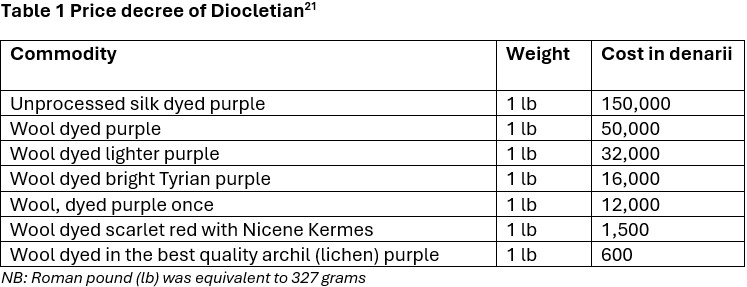
To place these numbers in some degree of perspective, the same list gives a price of 30 denarii for 1 sextarius (0.547 litres) of good wine and 8 denarii for ordinary wine. The same volume of olive oil cost 40 denarii. While quality and price of purples varied, they were often an order of magnitude more expensive than cloth dyed with insect or plant dyes.21
If its superior quality and expense were not enough to set wearers of Tyrian purple robes apart as socially or financially superior, another test of authenticity was smell. The Tyrian purple dye was extracted from mollusc flesh steeped for days and as such could smell of rotten fish. The 1st century CE Roman poet Martial informs us in one of his epigrams describing the idyllic nature of his hometown in Spain that, “nowhere will be seen the crescent shoe, nowhere the toga, and cloths smelling strong of purple dye.”22
The process of extracting the dye from the murex and dyeing wool is described by Pliny the Elder although later researchers attempting to replicate the process using his descriptions were unsuccessful or only partially so.23
The chemistry of Tyrian purple
Before venturing to describe the extraction of Tyrian purple and its chemistry, a brief description of dyeing with indigo (Fig. 1), which is chemically very similar to 6,6’-dibromoindigo, the compound producing the Tyrian purple colour (Fig. 2), is in order.


Indigo leaves were harvested, placed in vats of water to extract indoxyl glucoside and allowed to ferment, losing the sugar to produce a colourless, water soluble indoxyl (water soluble leuco form). The nearly colourless liquid was drained from the leaves and beaten to expose it to the atmosphere. A blue coloured insoluble material was then deposited when indoxyl oxidised, producing blue indigo which was dried and sold as a cake. Until 1897, when synthetic indigo appeared on the market, the cultivation of indigo plants to produce dye was a major industry in colonial America and India. The earliest dyeing with indigo was carried out by dipping cotton, linen or wool fibres in the clear fermentation liquid. The blue insoluble material was deposited on the fine structure of the fibre on oxidation with air.24, 25
Zvi Koran26 claims to have experimentally reconstructed a Tyrian purple natural dyeing process that could have been practiced in antiquity. The procedure is summarised as follows:
- Shells of Hexaplex trunculus snails are collected and carefully broken with a hammer. Seconds after puncturing the gland, a white mucus-like fluid is observed and within minutes a violet ink-like fluid begins to form.
- The jar of macerated snails is topped off with aqueous Na2CO3 (solution pH 9.0) and covered to minimise exposure to the air and reduce the pigment to a soluble form. The pH is kept at 9.0 with addition of Na2CO3.
- The solution is maintained at 50°C to provide the necessary conditions for thermophilic fermentation. The researchers found after four days of fermentation, and seven days after crushing of the shells, the pH had not decreased, indicating cessation of fermentation and complete reduction of a brominated indigoid to its soluble alkaline leuco form. The final solution was green in colour.
- A portion of woollen fleece was added to the solution for four hours at 50°C and immediately on removal of the wool its hue was green but after 20 seconds in air, oxidation of the leuco-indigoid components in the wool commenced and the purple colour began to develop.26
Note the similarities with dyeing using indigo. It should be noted that the natural product can have variable precursors with considerable species variation in the substituents attached to the indoxyl ring system. The distinguishing feature of precursors forming purple, as opposed to indigo, is the presence of organic bromine. Some murex lack a 6-Br substituent, one has 50% of the prochromogenic material lacking this bromine resulting in a distinctively blue-tinted purple.27
Given the breathtaking expense, it comes as little surprise that the judicial restrictions on the use of Tyrian purple became more and more restrictive in the Roman empire. Augustus’ reorganisation of the empire introduced a wide range of social stratifications based principally on property ownership resulting in widespread attempts to usurp social status and its status symbols through fraudulent means. It was relatively easy to appear rich or important without possessing the requisite wealth or office.
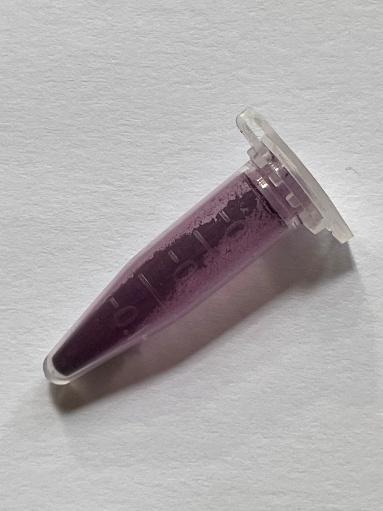
The author thought to perhaps join the purpurati and replicate the dyeing process of antiquity on a cheap cotton T-shirt. Ironically, even synthetic 6,6’-dibromoindigo is prohibitively expensive; in order to dye the trim of such a garment, given the masses required in antiquity of say 1.5 g, this might amount to thousands of New Zealand dollars.28
Well, there’s always Perkin’s coal tar dyes.
Featured image credit: Aplysia californica emitting ink cloud, By Genny Anderson - https://marinebio.net/marinescience/03ecology/tptre.htm, CC BY-SA 4.0, https://commons.wikimedia.org/w/index.php?curid=264835
References and notes
- Orna, M. V. The Chemical History of Color, Springer, Heidelberg, New York, Dordrecht, London, 2013. This book contains an excellent introduction to the use of colour in the ancient world, the physics of colour and how we ‘detect’ colour biologically in addition to the chemical causes of colour.
- Orna, M. V. 2013, 69-74.
- Orna, M. V. 2013, 47-48.
- Julius Caesar, The Conquest of Gaul, Penguin Classics, England, 1982 (V.14).
- Delmare, F.; Guineau B. Colour making and using dyes and pigments, Thames & Hudson, London, 2016.
- Delmare F.; Guineau B. 2016, 22-25.
- Pliny the Elder, The Complete Works of Pliny the Elder, Delphi Classics, Kindle edition, United Kingdom, 2015, XXXV.45. Pliny describes the Egyptian process of saturating cloth with mordents which are then plunged into the boiling dyeing liquid and emerge fully coloured.
- Wharton, D. A Cultural History of Color in Antiquity. Bloomsbury Academic, 2024, 50.
- Cartwright, M. Tyrian purple: The super-expensive dye of antiquity. World History Encyclopaedia https://www.worldhistory.org/Tyrian_Purple/ 2016 (accessed 20 April 2026).
- Malalas, John. Chronographia 2.9: https://www.calameo.com/read/000675905f2f4bf509d49 20-4-2026.
- Edmonds, J. Historic Dye Series No. 7 Tyrian or Imperial Purple Dye. John Edmonds Publisher, 2002.
- Elliott, C. Law & Social Inquiry 2008, 33(1), 173-194.
- Wai, Bi. Roczniki Humanistyczne 2024, 72(9), 101-120.
- MacKenzie, D. A. Folklaw 1922, 33(2), 136-169.
- Elliot, C. 2008, 180.
- Polybius, The Rise of the Roman Empire. Penguin Classics 1979, VI.53 p346.
- Elliot, C. 2008, 183.
- Bradley, M. Colour and Meaning in Ancient Rome. Cambridge University Press New York, 2009. Alexander’s treasury contained purple robes from his conquest of Persia more than 190 years old (Elliot, C. 2008, 180).
- Reese, D. Industrial Exploitation of Murex Shells: Purple-dye and Lime Production at Sidi Khrebish, Benghazi (Berenice). Cambridge University Press, 2015, 85.
- Athenaeus, The Deipnosphistae 12.526 https://www.attalus.org/old/athenaeus12a.html (accessed 20 April 2026).
- Price Decree of Diocletian, English translation https://kark.uib.no/antikk/dias/priceedict.pdf (accessed 21 April 2026).
- Martial, Complete Works of Martial. Delphi Ancient Classics. Kindle edition 2014, 1.49.
- Pliny the Elder, 2015, IX.62. The greatest encyclopaedist of antiquity gives the dying procedure as follows: “The most favourable season for taking these fish is after the rising of the Dog-star, or else before spring; for when they have once discharged their waxy secretion, their juices have no consistency: this, however, is a fact unknown in the dyers’ workshops, although it is a point of primary importance. After it is taken, the vein is extracted, which we have previously spoken of, to which it is requisite to add salt, a sextarius about to every hundred pounds of juice. It is sufficient to leave them to steep for a period of three days, and no more, for the fresher they are, the greater virtue there is in the liquor. It is then set to boil in vessels of tin, and every hundred amphoræ ought to be boiled down to five hundred pounds of dye, by the application of a moderate heat; for which purpose the vessel is placed at the end of a long funnel, which communicates with the furnace; while thus boiling, the liquor is skimmed from time to time, and with it the flesh, which necessarily adheres to the veins. About the tenth day, generally, the whole contents of the cauldron are in a liquified state, upon which a fleece, from which the grease has been cleansed, is plunged into it by way of making trial; but until such time as the colour is found to satisfy the wishes of those preparing it, the liquor is still kept on the boil. The tint that inclines to red is looked upon as inferior to that which is of a blackish hue. The wool is left to lie in soak for five hours, and then, after carding it, it is thrown in again, until it has fully imbibed the colour. The juice of the buccinum is considered very inferior if employed by itself, as it is found to discharge its colour; but when used in conjunction with that of the pelagiæ, it blends with it very well, gives a bright lustre to its colour, which is otherwise too dark, and imparts the shining crimson hue of the kermes-Berry, a tint that is particularly valued. By the admixture of their respective virtues these colours are thus heightened or rendered sombre by the aid of one another. The proper proportions for mixing are, for fifty pounds of wool, two hundred pounds of juice of the buccinum and one hundred and eleven of juice of the pelagiæ. From this combination is produced the admirable tint known as amethyst colour. To produce the Tyrian hue the wool is soaked in the juice of the pelagiæ while the mixture is in an uncooked and raw state; after which its tint is changed by being dipped in the juice of the buccinum. It is considered of the best quality when it has exactly the colour of clotted blood, and is of a blackish hue to the sight, but of a shining appearance when held up to the light; hence it is that we find Homer speaking of “purple blood.””
- Feelius, W. C.; Renfrew, E. E. Journal of Chemical Education 1983, 60(8), 633-634.
- Schatz, P. F. Journal of Chemical Education 2001, 78(11), 1441-1443.
- Koran Z. C. Chapter 15. The First Optimal All-Murex All-Natural Purple Dyeing in the Eastern Mediterranean in a Millenium and a Half. In: Dyes in the History of Archaeology, Archetype Publications, London, 2005.
- Ziderman, I. Review of Progress in Coloration and Related Topics 1986, 16, 46-52.
- 25 mg of 6,6’-dibromoindigo purchased by the author at the still not inconsiderable sum of NZD$150 + postage.