Global Women’s Breakfast
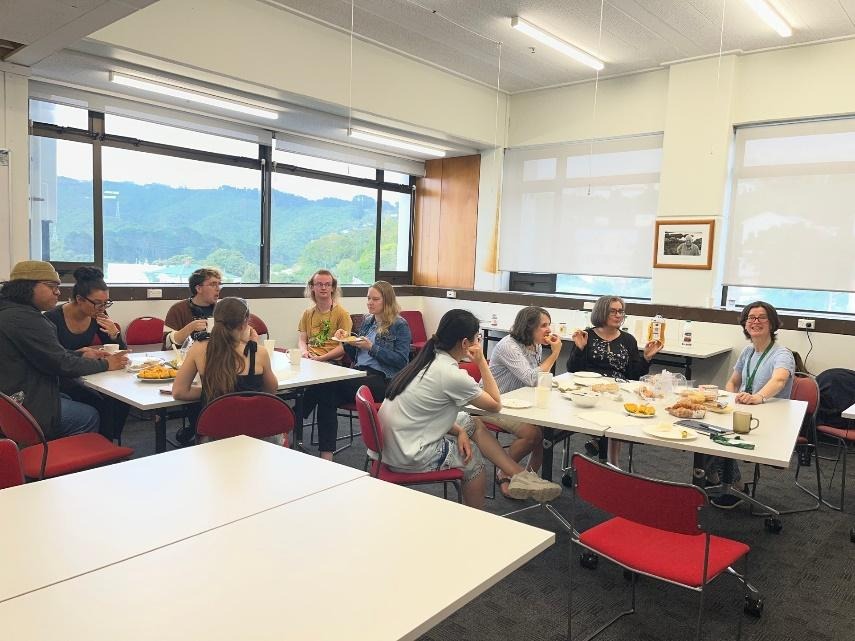
On 10 February the Wellington Branch celebrated the Global Women’s Breakfast with staff and students. Together we talked and ate pastries and fruit. Joanna Dowle from the Environmental Protection Authority gave an encouraging and inspiring talk on her career and the wisdom she has learnt along the way.
Travel grants
Last year the NZIC Wellington branch awarded travel grants to assist four students to attend Pacifichem 2025. The students who received funding were Beth Hawken, Brian Reid, Sanutep Chan and Ruth Pay. The following are their reports from their time at the conference.
Beth Hawken
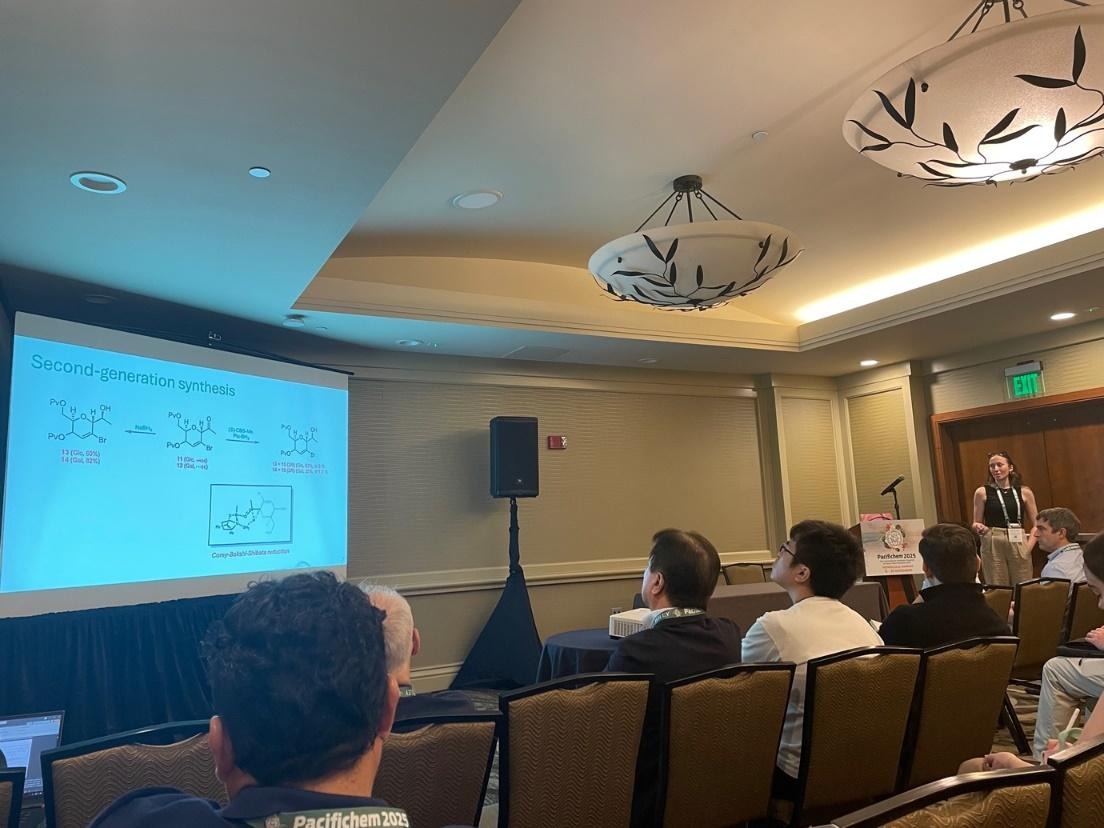
With support from the NZIC I was able to attend the International Chemical Congress of Pacific Basin Societies (Pacifichem), held in Honolulu in December 2025. I had the opportunity to give an oral presentation titled, “Development of a flexible and efficient synthetic route toward the bioactive fungal natural product (-)-TAN-2483B and lactam analogues.” In my talk, I shared results from the first year of my PhD project which is centred around the design and total synthesis of new natural product analogues. The synthetic targets for this project are sought as potential inhibitors for human disease-relevant kinases - Bruton’s tyrosine kinase (Btk) and bone marrow tyrosine kinase on chromosome X (Bmx). Attending and presenting at this conference allowed me to gain valuable feedback and insights from experts in the field, which will assist me as I continue my PhD research.
For me, a highlight of the conference was a presentation given by Dr Anna Zens titled, “Flipping the coin: from a synthetic dead-end to an antimalaria compound with improved activity.” This presentation detailed synthetic efforts toward the antiplasmodial natural product samroiyotmycin A. While attempts to remove the tosyl groups of advanced synthetic intermediate syn,syn-tosyl-samroiyotmycin A were not fruitful, this tosylated compound displayed improved antiplasmodial activity compared to the natural product syn,syn-samroiyotmycin A. I was particularly inspired by the idea that synthetic obstacles can lead to inadvertent success.
Brian Reid
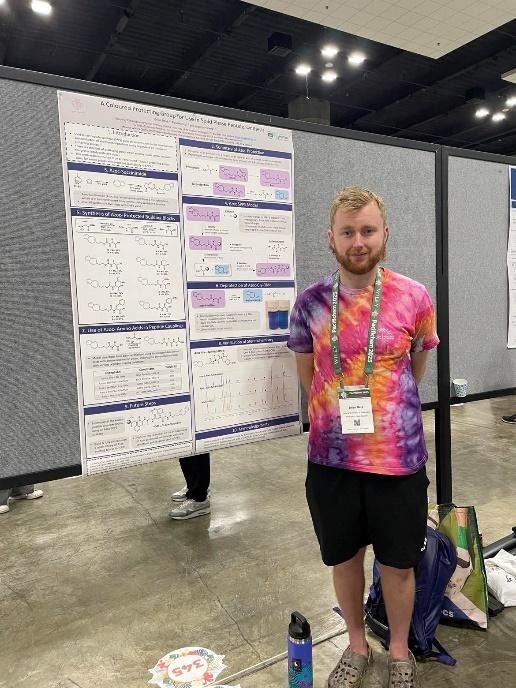
I recently had the opportunity to attend The International Chemical Congress of Pacific Basin Societies (Pacifichem) in Honolulu, December 2025. Here, I was able to present a poster on my research, focused on the development and use of a new protecting group, Azoc. Azoc functions analogously to Fmoc, being an amino protecting group with the projected use of peptide synthesis with an Azoc-SPPS strategy. Azoc contains the azulene chromophore and a change in conjugation between the protected amino substrate and its cleavage byproduct result in a distinct colour change, allowing facile monitoring of deprotection. This aims to increase the efficiency of peptide synthesis, as in the synthesis of “difficult” peptides complete deprotection of Fmoc can be variable and difficult to monitor, with destructive techniques required to assess the deprotection status, wasting precious material.
Pacifichem is a conference encompassing a broad range of chemical and adjacent sciences. I presented a poster in the “New Approaches to Complex Molecular Architectures” symposium, focused on the synthesis of complex organic molecules such as sugars, macrocycles, and peptides. Here, I got to meet experts in my field, as well as gain valuable insights from researchers who presented innovative work. Furthermore, other symposia in similar fields, such as total synthesis and natural products, showcased the diversity of modern chemistry, and helped to further my understanding and expertise.
I would like to sincerely thank the NZIC Wellington branch, from which I was a recipient of the NZIC Travel Grant. With this, I was able to attend this gathering, which proved to be an invaluable experience. I am thankful for this opportunity to present my research, meet researchers in my field from all over the globe, and find inspiration for my continued academic growth.
Sanutep Chan
There and Back Again: Pacifichem 2025 Honolulu, Hawaii
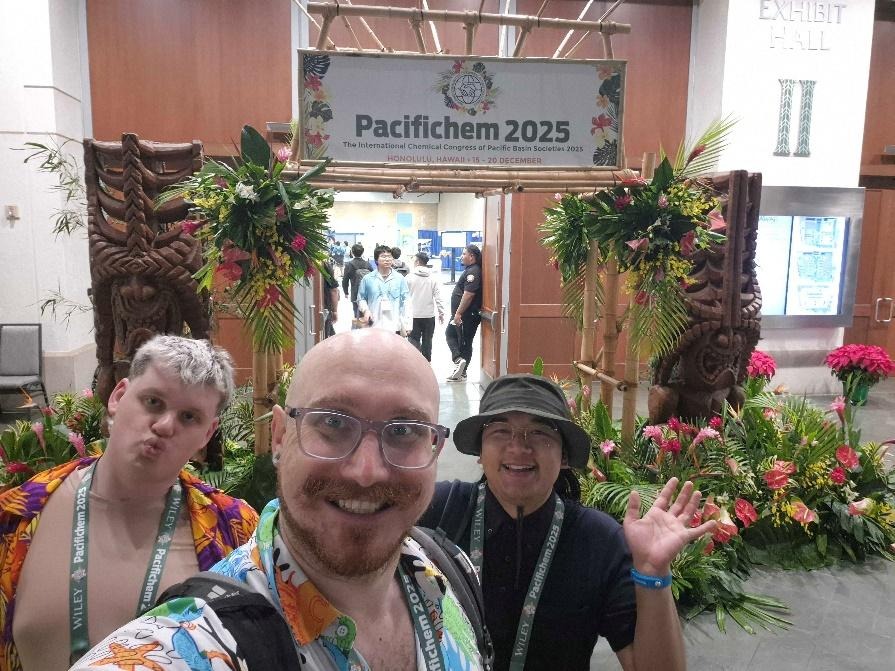
Attending a “big” conference is something to do at least once in your career. There are so many topics covered and simultaneous presentation sessions to see you will be spoilt for choice. Or, have decision paralysis! Pacifichem 2025 was such a conference, covering more fields in chemistry than you imagined existed with over 10,000 oral and poster presentations.
With all these presentations it was no struggle to stay stimulated across the five conference days. One could hop from a symposium on a topic as niche as “Lead-free perovskite solar cells: trends and challenges” showcasing deep and technical materials chemistry advances being applied to real world devices, and into another symposium as broad as “It gets better: pride in (Pacifi)Chem” which brought together the LGBTQ+ community and allies to share peoples’ experiences with inclusion in chemistry in their career, and celebrating the achievements of some very famous superstars – some of you may know Dr Andre Issacs from TikTok!
Ruth Pay
Marine Natural Products in the Omics Era: Reflections from Pacifichem
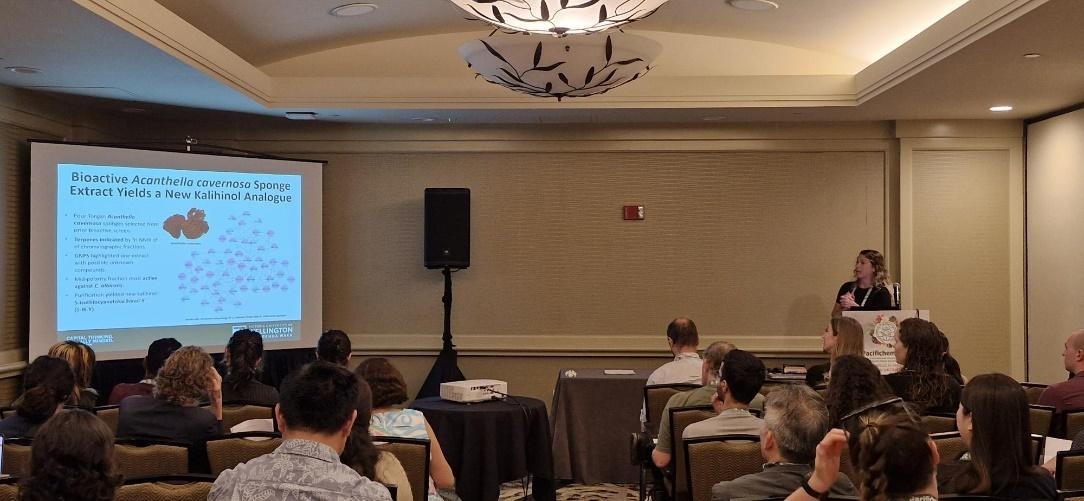
In December, I had the opportunity to attend and present at Pacifichem, one of the largest international chemistry conferences in the world. Held in Honolulu, Pacifichem brings together researchers from across the Pacific region to share advances spanning the breadth of chemical science. I was fortunate to present my PhD research in the symposium “Natural Products in the Omics Era.” This session highlighted how modern analytical and biological tools, including metabolomics and molecular networking, are transforming the discovery and mechanistic understanding of natural products. My presentation focused on the isolation and characterisation of Tongan marine sponge-derived diterpenes with antifungal activity. Presenting within this symposium was particularly meaningful, as the work closely aligned with the broader theme of integrating omics technologies with traditional natural products chemistry to accelerate drug discovery.
Beyond this symposium, Pacifichem offered an exceptional opportunity to engage with international leaders in natural products chemistry and chemical biology. I was especially inspired by talks demonstrating how advanced mass spectrometry workflows, genome mining, and biosynthetic approaches are being combined to unlock structurally complex and biologically significant metabolites. Attending Pacifichem significantly broadened my scientific perspective and strengthened connections within the global natural products community. I am sincerely grateful to NZIC for supporting my attendance through the Student Travel Grant, which made it possible to share my research on an international stage.