Global Women’s Breakfast (GWB) 2026
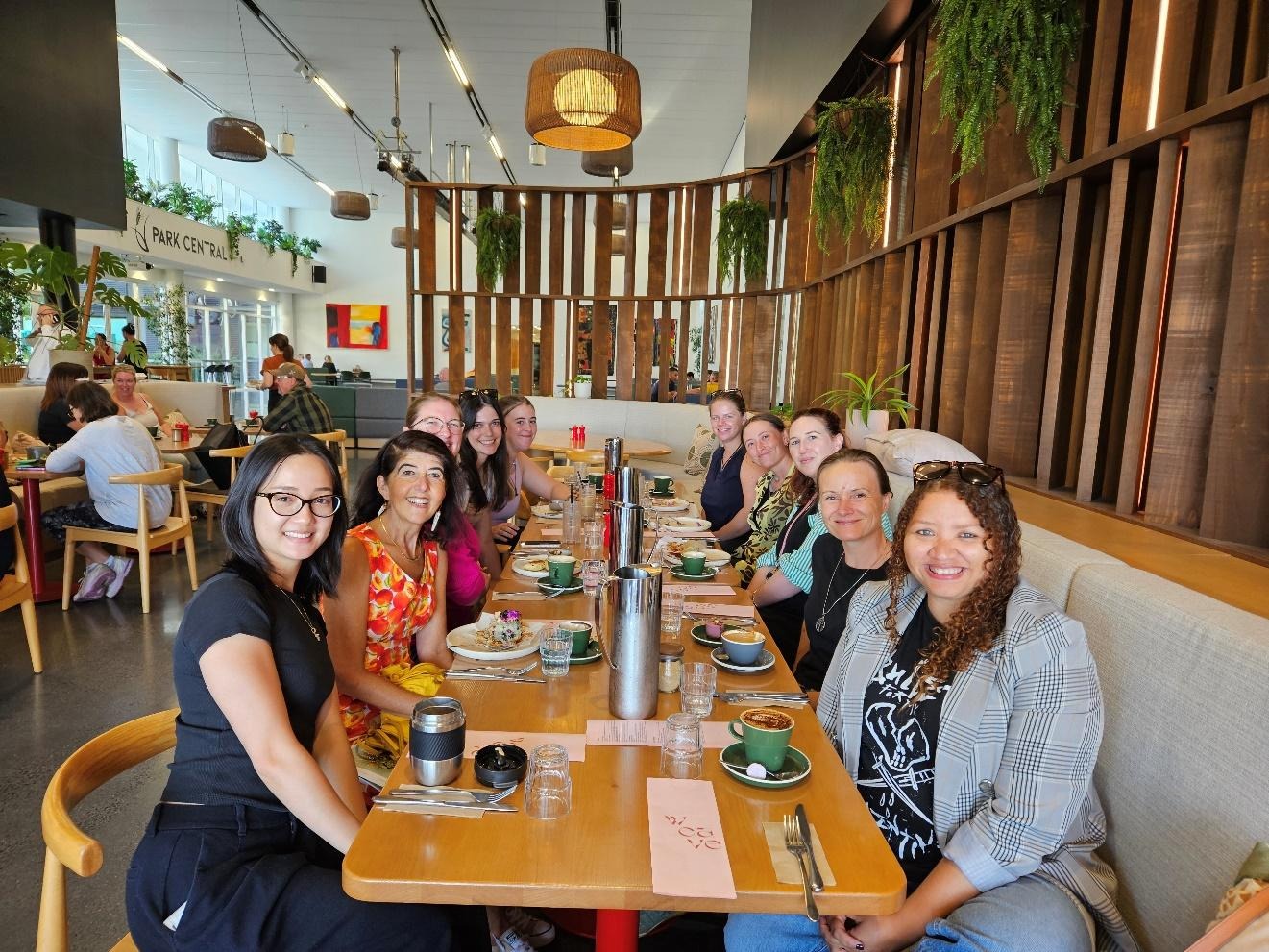
This year, the Waikato event was held at Weave Eatery on the Ruakura campus and was enjoyed by women scientists from a variety of different institutions.

University of Waikato
Several Master of Science students have completed their dissertations or are carrying out their dissertation research. Utsav Patel, working with Michael Mucalo, has completed his dissertation on chemical modification of loofah for stimulating calcium phosphate deposition on the surface and Ishan Wickramasinghe, working with Tameryn Stringer, has completed a project investigating the synthesis and biological activity of dinuclear ruthenium complexes.
Four students have started their dissertation with Megan Grainger. All four will focus on mānuka honey research with a practical aspect for industry. Ashwini Weerasinghe is developing an LC-MS/MS method for quantitation of phenolic compounds in mānuka honey. Ayeshmantha Pathirana will investigate the antioxidant activity of mānuka honey and compare analytical methods for their suitability, Liping (Sophia) Zhang will develop a new method for analysis of total phenolic compounds in mānuka honey due to interferences from compounds present in the matrix when using the standard test method and Nigel Tam will explore the cause of the apparent changing C4 sugar content in mānuka honey during storage.
Two students have also recently completed summer scholarship projects. Stella Beard, with Ben Dickson, utilised spare HPLC equipment to set up a basic flow reactor and then used it to characterise a nucleophilic aromatic substitution reaction in batch conditions. This prototype system lays the groundwork for future exploration of flow chemistry at the University of Waikato. Isaac Larsen, with Tameryn Stringer, has investigated the synthesis of half-sandwich metal complexes as potential anticancer agents, focusing specifically on their activity in lung cancer cell models. Co-supervised by Linda Peters from Biological Sciences, his project examined the synthesis, biological effects and underlying mode of action of these compounds.
We welcome some new research students to Waikato. Rahul Piyadigama (Engineering/Materials Science) has recently begun doctoral studies and is supervised by Michael Mucalo and Dalour Beg (Engineering) in the area of 3D printing of natural components for biomedical purposes. Gunjankumar Soni has commenced Masters study on spectroscopic and microscopic characterisation of ancient wood, supervised by Michael Mucalo and Adrian Pittari (Earth Sciences). Hinerangi Hughes, supervised by Michèle Prinsep, has commenced a Masters project on investigation of marine allelochemicals as environmentally safe and selective herbicides. Sally Mills will undertake an Honours project focused on designing novel metallodrugs to combat antibiotic resistance. Her work will explore innovative metal-based strategies to overcome current limitations in antimicrobial therapy, contributing to the development of new approaches to address the growing challenge of antibiotic-resistant infections.
Michèle Prinsep gave an invited keynote address at Pacifichem 2025 in the symposium “Natural products in the 'omics era”, entitled. “Investigating chemical criminals: probing nudibranch-prey interactions.” Ben Dickson gave a talk at SynthCon 7 in Arrowtown entitled, "Synthesis of evofosfamide (TH-302) and its putative metabolites." Michael Mucalo and Nikki Webb attended the second New Zealand Magnetic Resonance (NMR) Symposium in Rotorua (further details below).
We congratulate Amber Bell (current PhD student) who has recently been appointed to a full-time position as a technical officer in Chemistry.
Bioeconomy Science Institute (BSI)
NMR capabilities on show at symposium
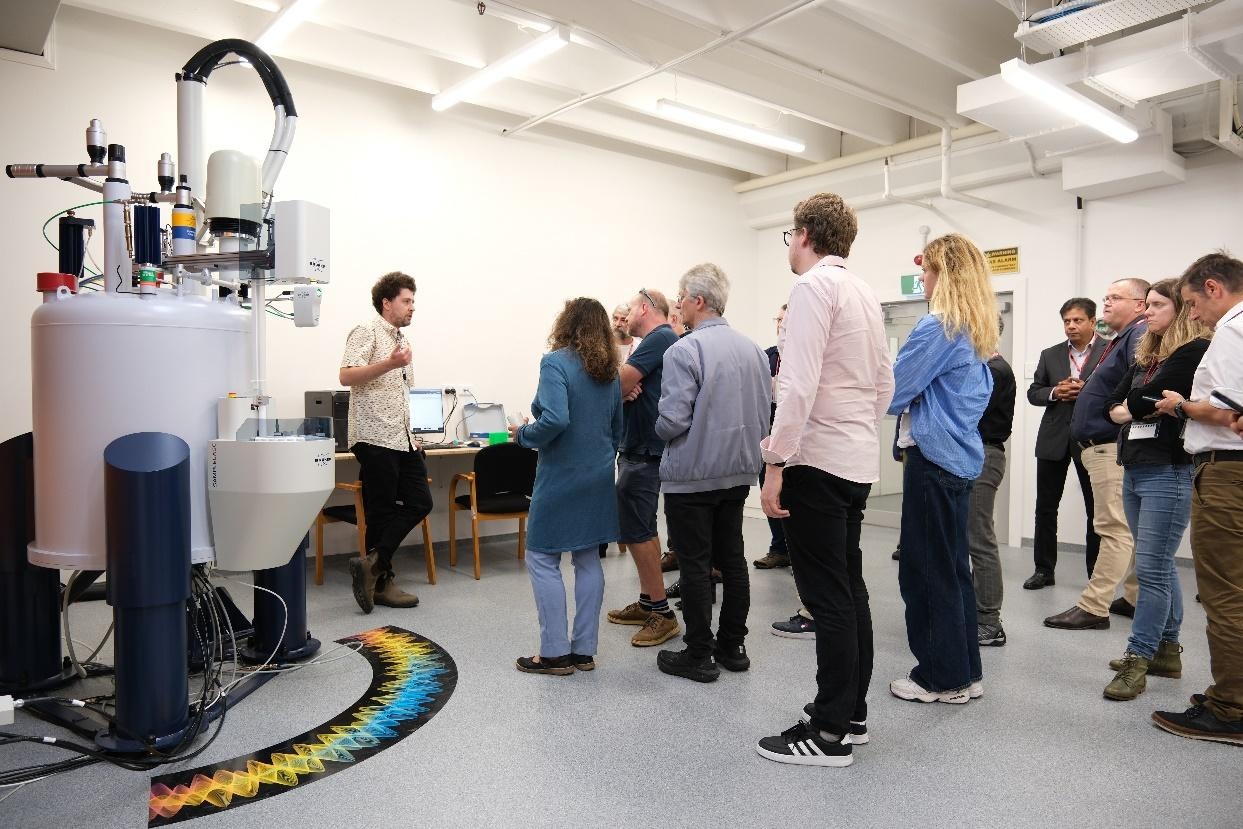
International researchers were among the more-than-50 people at the second New Zealand Magnetic Resonance (NMR) Symposium. Hosted by the Bioeconomy Science Institute Maiangi Taiao at its Rotorua campus on 12-13 February, the event brought researchers, academics, students and industry partners together to connect and share knowledge. It also showcased BSI’s NMR capabilities, with delegates invited to visit the Rotorua lab. BSI offers advanced NMR services that help researchers and industry identify, understand and characterise materials at the molecular level. Its Rotorua site has two advanced NMR machines: a Bruker NEO/EVO 600 MHz solution state NMR and a Bruker NEO/EVO 500 MHz solid (CP-MAS) and soft matter (HR-MAS) state NMR. Their open-door policy, aimed at supporting national research capability, means researchers across New Zealand and internationally can access the equipment and work alongside BSI scientists to analyse samples. “We are committed to collaborative research and have an open-door policy, providing hands-on access to these state-of-the-art tools for interested researchers,” says BSI research chemist Hayden Thomas.
Celebrating 10 years of UAV research
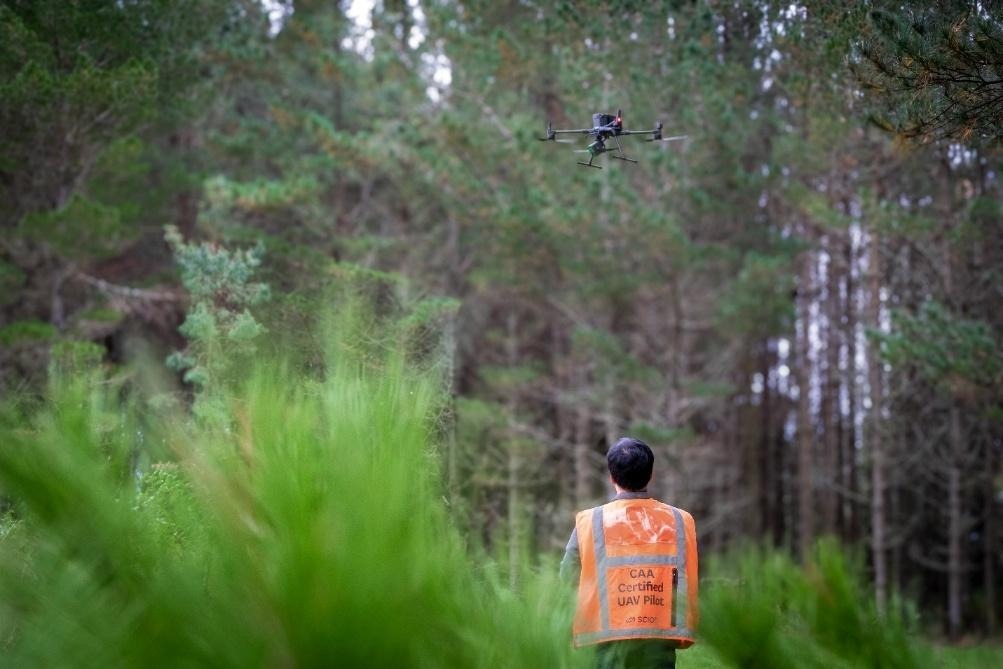
2025 marked a decade since Scion – now part of the Bioeconomy Science Institute – adopted unmanned aerial vehicles (UAVs) as a research tool to enable more effective forest management.
A pioneer in the field of UAV research, Scion bought its first drone in February 2015. Since then, UAVs have become a key way to capture aerial data for use in high-definition mapping and monitoring of forests. They’re also used for 3D modelling, sample collection, sub-canopy data captures and various types of imaging across multiple programmes.
The Bioeconomy Science Institute has Civil Aviation Authority Part 102 higher tier certification, which enables it to undertake UAV activity outside what standard operational licences allow. Scientist Robin Hartley says UAVs add a lot of value to the institute’s research.
“We regularly capture high-definition LiDAR for measuring trees. We can get ultra high-resolution maps of stands and trials, we are capturing spectral and thermal data to understand more about tree physiology remotely, and we’re working with companies to develop UAV spray systems specific to forestry needs.
“We’re also exploring niche areas such as sub-canopy flying for characterising stem and branch structure and collecting upper canopy samples,” he says.
The autonomous systems team has worked with industry over the past 10 years to enable them to adopt UAV technologies. “There is plenty of potential for UAVs to be used for other purposes within research and commercial forest management too, such as forest inventory, phenotyping and manual applications such as spraying and planting,” Robin says.
It all started in 2012, when research group leader and scientist David Pont was monitoring the development of UAVs and miniaturised laser scanning technologies. By 2015 a commercially available scanner had been matched to a drone from Aeronavics, a NZ-based UAV company working with the Hollywood film industry.
At the time, a geomatics team was being formed at Scion comprising scientists with airborne LiDAR expertise. The team bought a state-of-the-art LidarPod weighing 3kg and ordered the largest UAV they could find to carry it. This UAV provided a modern way to laser scan forest stands.
The industry took notice as the technology developed. Several forestry companies have since invested in trials and built in-house UAV capacity. The strong industry adoption was highlighted in a 2020 study that showed 83 percent of forestry companies in New Zealand use UAVs to capture aerial imagery.
The team also helped set up the Tools for Foresters (TFF) industry initiative, which connects researchers and foresters using UAVs in forests to share research, knowledge and resources. This helps enhance UAV technology development and encourage adoption of these tools.
Michael Wilson, inventory manager at Timberlands, says Scion’s work with UAVs over the past decade has helped shape how his company uses the technology in forest management operations.
“Scion’s work helped us see what was possible with drone technology – from precision aerial mapping to advanced canopy analysis – and gave us the confidence to invest in UAVs ourselves. It’s hard to imagine modern forest management without them now."
The Bioeconomy Science Institute continues to work with forest managers to develop systems that are relevant and cost-effective. “A recent survey showed a 20 percent increase across some key UAV uses that have been developed and promoted through TFF,” Robin says.
The institute’s autonomous systems team is focused on advancing techniques for the capture and use of LiDAR, photogrammetry and thermal and multi-spectral imagery.